
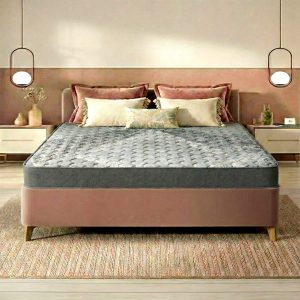


For about six years, I woke up every morning feeling like I’d been in a minor wrestling match overnight. Stiff neck, a dull ache across my lower back, that heavy grogginess two cups of chai couldn’t fix. I blamed my age. I blamed my job. I blamed the city, the weather, the stress — everything except the actual culprit, which was the lumpy mattress I’d bought in a hurry from a shop that cared far more about closing the sale than about my spine.
When I finally replaced it, I didn’t do the usual thing. I didn’t go to a showroom and perform that awkward five-minute lie-down while a salesman hovered nearby asking if I was “comfortable.” Instead, I ran what I now call the morning test — and honestly, it’s the only test that matters. Forget the marketing words on the tag. A delight mattress proves itself in the first ten minutes after your alarm rings, not under fluorescent showroom lights.
What the morning test actually is
The morning test is embarrassingly simple: your body grades your mattress every single morning, whether you pay attention or not. The problem is that most of us never learned to read the grades. We accept waking up stiff as a personality trait. We accept the 3 AM wake-ups as “just how I sleep.” We don’t connect the dots, because nobody told us the dots were there to connect.
The three-minute body scan
Here’s how it works. Before you reach for your phone in the morning, spend three minutes noticing things. Does your neck turn freely, or does it protest? Do your shoulders feel open or bunched up near your ears? Is your lower back quiet, or is it already complaining before you’ve even stood up? A good mattress lets you lie still all night without your muscles doing overtime to keep your spine aligned. A bad one makes your body work the night shift.
The energy audit
The second part of the test is even simpler: how do you feel at 11 AM? Not after coffee — coffee is cheating. Just your baseline energy. Bad sleep debt shows up as mid-morning fog and irritability over small things. A mattress is either paying into your energy account every night or quietly withdrawing from it.
Why most mattresses fail the morning test
Once you start paying attention, you notice how many mattresses are designed to impress you for five minutes in a store rather than support you for eight hours at home. The showroom is a terrible place to judge a mattress, and the industry knows it.
The sagging middle
You won’t see a dip in the first year, but after a couple of years of your body weight landing in the same spot every night, a cheap mattress develops a valley right where your hips are. Your spine spends the night slightly bent, and you wake up wondering why your back feels decades older than the rest of you. The feel on day one is marketing; the structure inside is the truth.
Heat and the midnight shuffle
The second failure is temperature. Some mattresses sleep hot — you know the feeling, waking up at 2 AM with your back damp, flipping the pillow to the cool side, eventually giving up and lying on top of the blanket like a lizard trying to cool down. In Indian weather, this isn’t a minor comfort issue; it’s the difference between sleeping through the night and broken sleep every single night of summer.
Breathable materials matter enormously here. Natural coir, for instance, lets air move through the mattress instead of trapping body heat against you — one reason coir mattresses have stayed popular in Indian homes for generations. When a mattress lets heat escape, your sleep gets the one thing it needs most: continuity.
What a truly delightful mattress does differently
So what separates the mattresses that pass the morning test from the ones that fail it? It isn’t price, though quality materials do cost money. It isn’t brand name, though experience counts for something. It’s a handful of boring, unglamorous qualities that you only appreciate once you’ve lived with them.
A truly delightful mattress does three things at once: it supports your spine in a neutral position, it distributes your weight so no single point bears too much pressure, and it stays comfortable through the whole night without making you overheat. That’s it. No magic, no miracle technology — just honest engineering done well.
Support is not the same as hardness
This is the misconception I had to unlearn. For years I thought a “good” mattress meant a hard mattress — the firmer the better, suffer now and thank me later. That’s nonsense. A mattress can be rock-hard and still terrible for your back if it doesn’t contour to your body’s curves. What your spine needs is support that fills the gaps — the small of your back, the curve of your neck — while letting your shoulders and hips sink just enough.
Materials that survive real years, not showroom years
The other thing that separates good from mediocre is what happens in year four. Any mattress feels decent in month one. The question is whether the foam is still springy, the springs are still springy, and the layers are still where they were put. This is where buying from an actual manufacturer with real experience starts to matter — a company that’s been making mattresses for over twenty years has learned which materials give up early and which ones go the distance.
Warranties tell you something honest here. A manufacturer offering five to ten years of warranty is betting its own money the mattress will hold up. A seller offering one year — or nothing — is telling you everything. Ask about the warranty before you ask about the price.
Run the test before you spend a rupee
Here’s the part that would have saved me six years of bad mornings: you don’t have to gamble. The morning test can be run before you buy, if the seller is confident enough in their product to let you.
Why the showroom lie-down is a polite scam
Lying on a mattress for five minutes in a store tells you almost nothing. Your body needs at least twenty minutes to settle, and you need actual sleep — real, unconscious sleep — to know whether a mattress works. The showroom mostly measures first impressions, which is roughly as useful as judging a marriage by the wedding photos.
Two days at home beats two minutes in a store
This is why I get genuinely enthusiastic about services that let you try a real mattress at home. Matprro, a Mumbai-based manufacturer that’s been making mattresses since 2002, runs a doorstep sample service in Mumbai, Pune and Goa: they deliver a real 19×19 inch sample of the actual mattress to your home within 48 hours, you sleep on it and live with it for two days, and then they collect it. No showroom awkwardness, no salesman hovering, no guessing.
Two days is enough to run the real morning test on a delight mattress candidate. You’ll know by the second morning whether your neck is happier and whether the firmness suits you. And because the sample is the actual mattress material — available for models like Afford Plus, Ortho Elite, Memory Plus, Bounce Plus and Mono Latex — there’s no bait-and-switch between what you tried and what arrives. Replacing an old mattress? Ask about the exchange offer too — trading in the old one can get you cashback of up to Rs. 2,300 depending on the model.
Frequently asked questions
How long does it take to know if a new mattress is right?
Give it at least a week of real sleep, though the morning test usually gives you a strong signal within two or three nights. Your body needs a few nights to unlearn old postures. If mornings are clearly better by night three, you’re on the right track.
Is a firmer mattress always better for back pain?
No — this is one of the most persistent myths in the mattress world. What matters is support, not hardness. A mattress that’s too firm for your body type creates pressure points at the shoulders and hips, which is its own kind of morning misery. The right firmness depends on your weight, sleeping position and personal comfort. When in doubt, try before you buy rather than trusting a firmness label.
What’s the biggest sign my current mattress needs replacing?
The sag test: lie on your back and slide your hand under the small of your back. If there’s a big gap, or a visible dip where you usually sleep, the support layers have given up. Waking up stiff most mornings and sleeping better in hotels than at home are the same message from your body.
Can I really judge a mattress from a small sample piece?
Surprisingly well — as long as the sample is the actual mattress material, not a fabric swatch. A 19×19 inch real-mattress sample lets you feel the actual firmness and materials. It’s far more informative than a showroom lie-down. A mattress that delights you in sample form will almost certainly delight you in full size.
How often should a mattress be replaced?
Most quality mattresses last seven to ten years, which lines up with the five-to-ten-year warranties serious manufacturers offer. But the calendar matters less than the morning test — if your mornings have quietly gotten worse and the mattress is past five years, it’s probably done.
The short version
Your body is already running the morning test every single day. The only question is whether you’re listening to the results. Stiff neck, aching back, groggy 11 AMs — that’s your mattress failing the test, night after night. A delight mattress isn’t about luxury branding or fancy marketing words. It’s about boring mornings: you sleep, you wake up, nothing hurts, and you get on with your day. If that sounds unremarkable, you’ve clearly never spent six years waking up wrong. Run the test. Trust your mornings. They’re the most honest reviewer you’ll ever meet.