
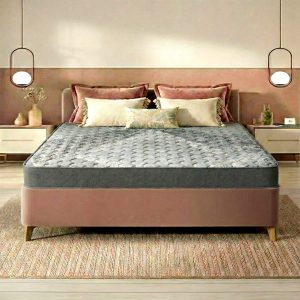
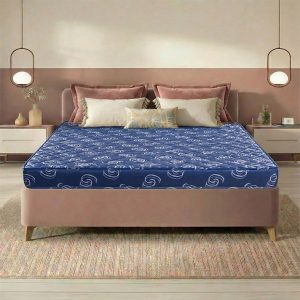
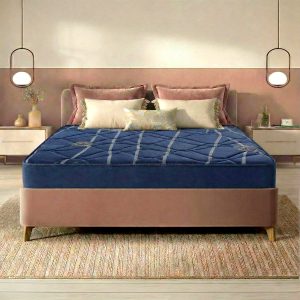
Buying your first orthopedic mattress is one of those adult purchases nobody prepares you for. Nobody in school teaches you what “40-density bonded foam” means. Your parents probably bought theirs from the one shop near Rajwada the whole family has used for twenty years. And now you are standing in a showroom in Indore — Vijay Nagar, AB Road, somewhere near Sarafa — nodding along while a salesperson throws words like “ortho,” “memory,” “latex,” and “coir” at you.
I have spent years in the mattress business — here is what I tell my own cousins: relax. You do not need a materials science degree. You need a handful of decoded terms, a few traps to dodge, and the confidence to trust your own body over a brochure. That is what this guide is.
First, the Jargon — Decoded in Plain Language
Almost every classic orthopedic mattress Indore shoppers come across is built from the same small family of materials. Here is what each one actually does, minus the marketing fog.
Bonded foam (the workhorse)
This is the backbone of most orthopedic mattresses in India. Shredded foam compressed and bonded into a dense, firm slab. It is heavy, it does not bounce much, and it holds its shape for years. When a mattress is described as “orthopedic,” bonded foam is very often doing the supporting.
PU foam (the comfort layer)
Polyurethane foam in various densities. The soft top layer you actually feel is usually PU foam. Higher density means it keeps its shape longer; low-density PU foam is what goes flat and lumpy in two years. Ask for the density number — 40 and above in the support layers is what you want to hear for a genuinely supportive build.
Memory foam (the slow hug)
It softens with body heat and moulds around you — luxurious for the first minute. The catch: memory foam is a comfort material, not a support material. A memory top on a weak base is still a weak mattress. And in Indore’s summers it can sleep warm — worth knowing before you fall for the showroom air-conditioning.
Coir (the desi classic)
Rubberised coconut fibre — firm, breathable, and very Indian. Great airflow, which matters in our climate. It is firmer than foam, so coir mattresses feel harder. Some people love that; some find it too unforgiving. There is no wrong answer, only your back’s answer.
Latex (the premium option)
Natural or blended latex is bouncy, durable, and breathable — and it costs more. If your budget stretches, it is arguably the longest-lasting comfort material. Mattress warranties tell the story here: in Matprro’s own range, for example, the Afford Plus carries a 5-year warranty while the Mono Latex goes up to 10 years. Materials genuinely differ in lifespan, and the warranty usually reflects that.
What “Orthopedic” Promises — and What It Can’t
Let me save you from the biggest misconception first-timers carry in: no mattress fixes back problems. Not mine, not anyone’s. A classic orthopedic mattress in Indore — or anywhere else — is designed to support your sleeping posture: keeping your spine reasonably aligned instead of letting your hips sink and your lower back sag. That is comfort and support. It is not treatment, and any salesperson who talks about curing your back pain is selling, not advising.
Also know this: “orthopedic” is not a certified label in India. No authority tests and stamps mattresses as orthopedic. It is a manufacturer’s way of saying “this one is built firmer and more supportive.” Some live up to it; some just stick the word on a regular firm mattress and raise the price. Your job is to tell the difference — and by the end of this guide, you will know how.
The 5-Minute Lie-Down Test (Do Not Skip This)
Take your shoes off and lie down in the position you actually sleep in for at least five minutes. Showroom mattresses are tested by sitters; real mattresses are tested by sleepers. Be a sleeper.
While you are down there, run three checks. First, the hand test: on your back, slide your flat hand under your lower back. It should go in with slight resistance. Big easy gap means too firm for you; no gap at all means you are sinking and it is too soft. Second, the side check: on your side, your spine should look roughly straight — ask someone with you to look, or have the staff take a photo. Third, the pressure check: after a few minutes, are your shoulder or hip aching or going numb? That is the comfort layer failing you, even if the mattress is “orthopedic.”
One more thing: test the edge. Sit on it like you do every morning getting out of bed. If it collapses or you feel like sliding off, the edge support is weak — annoying every single day, not just on day one.
Run this routine on every classic orthopedic mattress in Indore you shortlist, and the wrong ones will eliminate themselves fast.
Traps First-Timers Walk Into
Trap 1: The discount drama. MRP ₹40,000, “special price” ₹16,999, “only for you.” In the mattress trade, the MRP is largely theatre. Compare actual selling prices across stores instead of marvelling at the discount percentage.
Trap 2: Buying the firmest thing in the store. First-timers hear “orthopedic” and assume harder is better. It is not. Too firm means pressure on shoulders and hips and waking up sore in new places. Supportive is the goal; rock-hard is just uncomfortable with better marketing.
Trap 3: Ignoring the bed base. Your mattress is only as good as what it sits on. A sagging old box bed or a broken slatted diwan will ruin even a great mattress. If your base is ancient, factor its repair or replacement into the budget.
Trap 4: Not asking about the return policy. Most physical stores in Indore do not offer trial periods — once it is delivered, it is yours, maybe with a short exchange window. Ask before paying what happens if you hate it in two weeks — and get the answer in words you can hold them to.
Trap 5: Forgetting custom sizes exist. Indian homes are full of non-standard beds — the old teak diwan, the box bed from 1998, the custom-made frame. You do not have to squeeze a standard size into it. Manufacturers like Matprro customise mattresses to customer specifications, so measure your bed frame properly (length, width, and the height you want) and order the size that actually fits.
Questions to Ask Before You Pay
Walk in with these five and you will instantly separate the knowledgeable sellers from the brochure-readers:
1. “What are the layers, top to bottom, with thickness and density?” A real product person answers in numbers. A bluffer answers in adjectives.
2. “What does the warranty cover, and what voids it?” Warranties on decent mattresses run 5 to 10 years depending on the model. But ask about sagging depth limits, stain clauses, and base requirements — the exclusions are where warranties quietly die.
3. “Is this customisable — size, firmness, or both?” Especially relevant if your bed is non-standard.
4. “What is your exchange or return policy, exactly?” Days allowed, condition requirements, any charges. In writing if possible.
5. “Do you take my old mattress, and is there any exchange value?” Some manufacturers run exchange offers — Matprro, for instance, has a Mattress Exchange Offer with cashback up to ₹2,300 depending on the model. But upfront honesty: that offer, like their delivery and free Doorstep Sample Service (a 19×19 inch real-mattress sample delivered within 48 hours, tested 2 days, then collected), currently covers Mumbai, Pune and Goa — not Indore. Do not walk into an Indore store expecting it; call +91-7835959392 to ask what options exist for your city.
What About Buying Online Without Testing?
Tempting, I know — the prices look better and the reviews sound convincing. But for your first orthopedic mattress, test in person if you possibly can. Firmness is deeply personal — your weight, sleeping position and old injuries all change what “medium-firm” feels like. Reviews cannot lie on the mattress for you.
If you do buy online, do it only where the return policy is real and written down, not “sir, trust me.” And use online research for what it is good at: comparing layer specifications and prices across brands. A dedicated orthopedic build like the classic orthopedic mattress line gives you a useful reference for what proper support construction looks like — then go feel things with your own back before spending the money.
FAQs
I have never bought a mattress myself. Where do I even start?
Start with your bed, not the store. Measure your frame, note your sleeping position and weight range, and set a budget. Visit two or three stores, lie on shortlisted options for five minutes each, and compare layer specifications — not discount percentages. The jargon section above is all the theory you need.
How much should a first-timer spend on an orthopedic mattress?
No magic number — but price roughly follows materials and warranty length. A latex build with a 10-year warranty costs more than a basic bonded-foam build with 5 years, for real reasons. Set your budget, then buy the best layer construction inside it rather than stretching for a brand name.
Firm or medium-firm — which is right for a first orthopedic mattress?
Most first-timers do well starting at medium-firm: supportive underneath, forgiving on top. Side sleepers usually need a touch more give; back and stomach sleepers usually want flatter and firmer. Your body is the final judge — trust what you feel at minute five, not minute one.
Can I get a mattress made for my non-standard bed size?
Yes. Many Indian manufacturers build to customer specifications — custom length, width, even thickness. Measure carefully, confirm the size in writing before ordering, and ask whether customisation changes the return terms.
Does Matprro deliver to Indore or offer the sample service here?
Honestly: no, not currently. Matprro’s delivery, free Doorstep Sample Service, and Mattress Exchange Offer cover Mumbai, Pune and Goa. From Indore you can still call +91-7835959392 to discuss your requirements — but do not expect the doorstep sample or exchange offer here, and treat any store claiming otherwise with suspicion.
The Bottom Line
Here is everything in one paragraph: decode the jargon so nobody can bluff you, lie down for five real minutes, ask about layers and warranty fine print, dodge the discount theatre, and remember that “orthopedic” describes support — not a cure. A classic orthopedic mattress in Indore is a big purchase, but it is not a complicated one once you strip away the sales talk.
And one last piece of cousinly advice: do not let anyone rush you. The salesperson’s urgency is not your urgency. Buy when your back, your budget, and the fine print all agree — your next ten years of mornings will thank you.